
You're standing in the garage listening to the door grind and shudder on its way up, and your spouse says it: "The overhead door at that warehouse we drove past looks way heavier duty than ours. Why can't we just get one like that?" It's a fair question, and it's worth settling with facts instead of guessing, especially before anyone starts pricing out a replacement based on the wrong kind of door.
The short answer is that commercial and warehouse overhead doors and residential garage doors are built to solve different problems. A warehouse door might open and close a dozen times a day for delivery trucks and forklifts. Your garage door opens a couple times a day for your car. That difference shapes almost everything about how each one is built and maintained.
What Actually Separates a Commercial Door from a Residential One
It's not just size. A few things change under the hood:
- Steel gauge and panel construction. Commercial doors typically use heavier gauge steel, sometimes with reinforced or insulated panels designed to take impacts from equipment, pallets, or weather exposure in a working bay. Residential doors are built lighter because they don't need to survive a forklift tap.
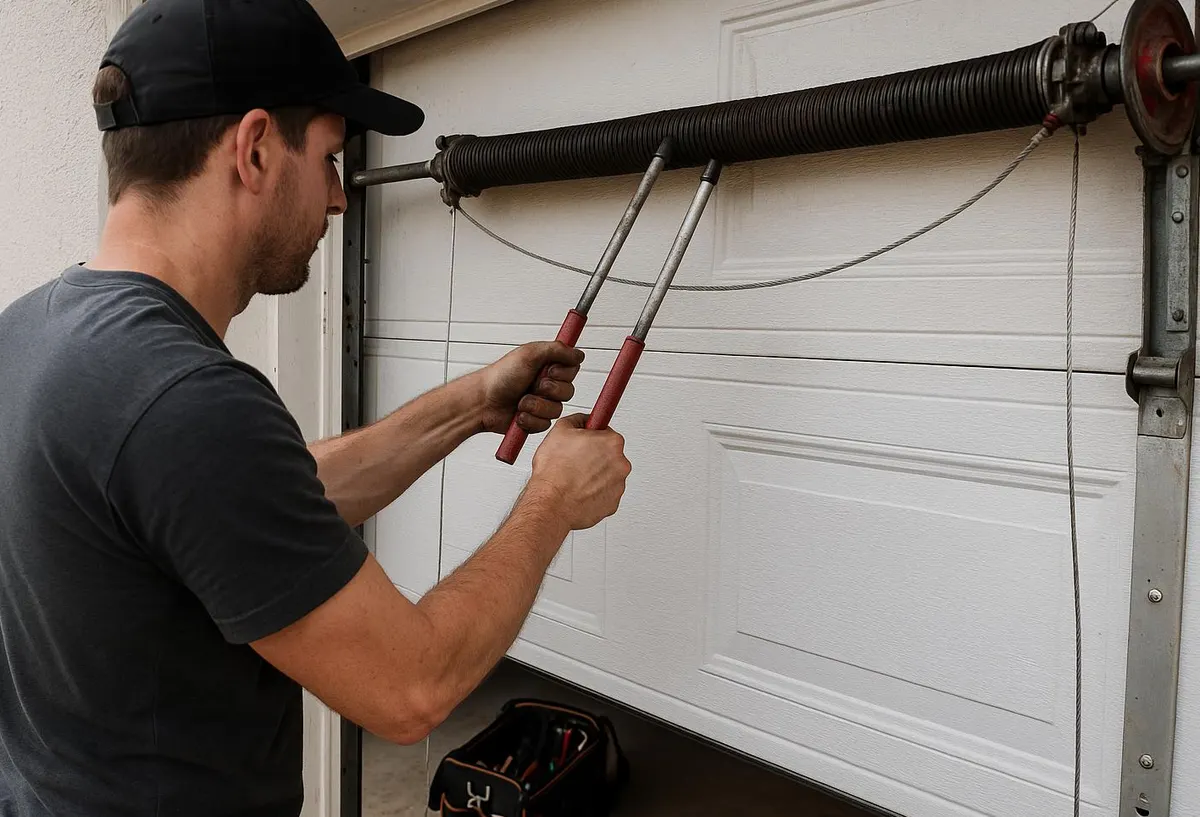
- Spring systems rated for cycles. Residential torsion springs are usually rated for around 10,000 cycles, roughly 7 to 10 years of normal use. Commercial doors often use springs rated for 20,000, 50,000, even 100,000 cycles because they're opening and closing all day, every day.
- Track and hardware weight. Heavier doors need heavier tracks, rollers, and hinges. A commercial door's track is bolted to structural steel; a residential door's track is mounted to wood framing that was never meant to carry that kind of load.
- Operators. Most homes use a standard chain or belt-drive opener rated for lighter, less frequent use. Commercial settings often run jackshaft operators or heavier-duty motors built for constant cycling and sometimes larger horsepower.
Put simply: a commercial door is overbuilt for a job your garage door will never have to do. Installing one on a house usually means paying for strength and cycle life you don't need, plus dealing with a door that's heavier than the opener, track, and framing in a typical home were designed to support.
Where the Comparison Does Matter for a Homeowner
There's one place this conversation is genuinely useful: if you've converted part of your garage into a workshop, run a home-based business out of it, or open and close the door far more often than average, the logic behind commercial-grade components starts to apply to you too. In that case, upgrading to a higher-cycle torsion spring or a heavier-duty opener isn't overkill, it's matching the door to how you actually use it.
Maintenance Looks Different Too
Because commercial doors cycle so much more, they're usually on a stricter maintenance schedule, often monthly or quarterly inspections of springs, cables, rollers, and the opener's safety reverse. A residential door doesn't need that kind of attention, but it still needs regular care, especially given what the weather here does to it.
What Downriver Winters Do to Any Overhead Door
Deep cold stiffens lubricant, shrinks metal slightly, and makes springs work harder to lift a door that's colder and heavier with road salt grime. Ice buildup at the bottom seal can keep the door from closing flush, and salt-laden slush tracked in from the driveway accelerates rust on tracks, hinges, and the bottom panel. Spring thaw brings its own issue: mud and moisture that can work into the track and bottom rollers, causing grinding or uneven movement right when you think winter's over.
- Wipe down and lubricate tracks and hinges with a silicone-based spray before the hardest cold sets in.
- Check the bottom weather seal for cracks or gaps that let in drafts and moisture.
- Keep an eye on rust spots along the track, especially after heavy salt use, and address them before they spread.
- Listen for new grinding or popping sounds as temperatures swing; that's often hardware reacting to the cold, not just normal wear.
When to Call Taylor Garage Door Co
If your door is groaning, slow to open, or dragging on one side, that's usually a spring, cable, or track issue, not a sign you need a commercial-grade replacement. Our Spring Repair & Replacement service handles the torsion spring wear that's common after a few Michigan winters, and our Garage Door Maintenance visits catch rust, misaligned track, and worn rollers before they turn into a stuck door on a cold morning. If you do run a shop or business out of your garage and want a door and opener actually built for heavy daily use, we can talk through what makes sense for your setup instead of guessing.
If you're in Taylor, Dearborn Heights, Allen Park, Southgate, Lincoln Park, Romulus, Wyandotte, or Brownstown Township and your garage door needs a second opinion, give Taylor Garage Door Co a call. We'll tell you straight whether you need a repair, a tune-up, or something more, no oversized commercial door required.